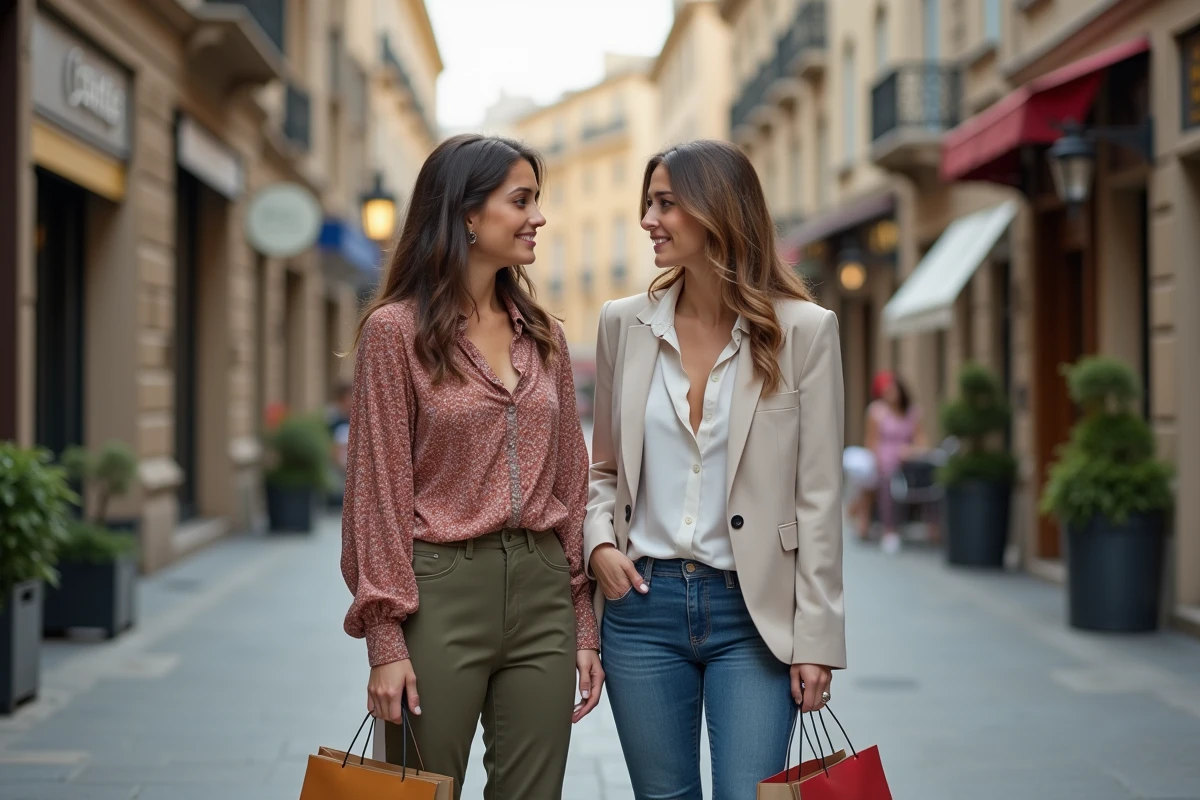
Comparing Mango and Zara is to dive into the antechamber of an industry where the frantic pace of collections is not an option, but a tacit rule. Behind the facade of storefronts and Instagram campaigns, their supply chains tell different stories, their margins hardly resemble each other, and the loyalty of their customers is written through well-defined strategic choices.
Mango and Zara: what fashion philosophies lie behind two Spanish giants?
These two heavyweights of Spanish ready-to-wear come from the same country but quickly diverge toward their own horizons. Zara, born in La Coruña in 1979 and a pillar of the Inditex giant, has built a reputation on speed and flexibility. Every week, new items hit the stores. Inditex’s industrial apparatus, a true logistical war machine, allows Zara to sense trends and launch them even before they stabilize on social media.
Just a few hundred kilometers away, Mango established itself in Barcelona in 1984. Under the leadership of Antonio Ruiz, the brand builds a more composed, almost architectural identity around urban and minimalist inspiration. The tempo is not dictated by mere haste, but by a desire for coherence and balance in the collections. Mango expands its lines, Mango Man, Kids, Home, Teen, to diversify its offerings without sacrificing its DNA.
A comparison between Mango and Zara often highlights their status as Spanish leaders and their global reach. However, behind the similarities, the differences become more pronounced. Zara stands out for the fluidity of its offerings and its ability to adapt to real-time demand. Mango, on the other hand, seeks to embody a brand that feels close, almost intimate, by betting on stable creativity and a long-term vision. Two strategies, two narratives, propelling the Spanish industry to the forefront of the global stage in 2025.
From collections to pricing strategies: where do they converge, and where do they truly oppose each other?
To understand what sets Mango and Zara apart, one only needs to look at how each structures its collections and builds its pricing policy. Zara constantly pushes the limits of renewal: new ranges, varied concepts like Zara Home or Zara Ski, spectacular collaborations… The goal? Never let the consumer settle into routine.
At Mango, the logic is different. The brand focuses on multiplying specialized lines, each designed for a distinct audience: men, children, teens, home. This segmentation is not just a marketing detail; it is a tool for customer loyalty and identity affirmation.
To provide a concrete overview of this dynamic, here are some collaboration choices that distinguish their strategies:
- Zara surrounds itself with international personalities like Stefano Pilati, Kate Moss, Saint Laurent, Gisele Bündchen, or Cindy Crawford to reach a young and cosmopolitan audience.
- Mango favors partnerships with established or emerging designers: Victoria Beckham, Simon Miller, Siedrés, or Camille Charrière. The goal is to strengthen its creative grounding and uniqueness on the fashion scene.
On the issue of responsible development, both brands are making progress, but at different paces and with different narratives. Mango, with Justi Ruano, readily showcases its advancements. Zara, on its part, proceeds cautiously, but the power of Inditex accelerates the rise of responsible collections.
In terms of figures, the contrast is stark: Inditex, the parent company of Zara, reports a profit of €5.87 billion in 2024, while Mango reaches €219 million. Two scales, two approaches to growth and upgrading.
Their ambition? To rise towards a premium image. Both brands refine their pricing, communication, and in-store presence to attract a clientele in search of quality and transparency. However, the speed of execution, creative boldness, and management of their image on social media widen the gap, each following its own path.

Choosing between Mango and Zara based on style, values, and budget
Choosing between Mango and Zara is not limited to a simple aesthetic preference. Both brands embody clear, almost opposing visions of what ready-to-wear should be today. Mango, true to its Barcelona roots, works an urban, clean, structured look. Its collections, under the direction of Antonio Ruiz, display a strong coherence and present precise universes for each segment.
Zara, backed by the power of Inditex, prioritizes responsiveness and diversity. New items follow one another, collaborations multiply, and the brand occupies the digital space at a rapid pace.
For those who place responsibility and sustainability at the heart of their purchases, there are nuances to observe. Mango widely communicates about its eco-designed lines. Zara, more discreet, nevertheless benefits from Inditex’s logistical strength to accelerate its transition to more virtuous collections. In both cases, the pursuit of quality and traceability emerges as a key criterion for choice.
As for the budget, the trend is leaning towards the high end: prices are rising, the image is refining, and the experience in-store and online is enriching. On the expansion front, Mango announces the opening of 500 new stores by 2026, while Zara expands its network from Europe to India. The dilemma then becomes this: prioritize creative stability and transparent display of commitments, or yield to the whirlwind of novelty and the growing influence of an industrial giant?
It is up to each individual to decide, as Spanish fashion no longer allows for indifference: between Mango and Zara, an entire aspect of our consumption habits is being shaped, collection after collection.