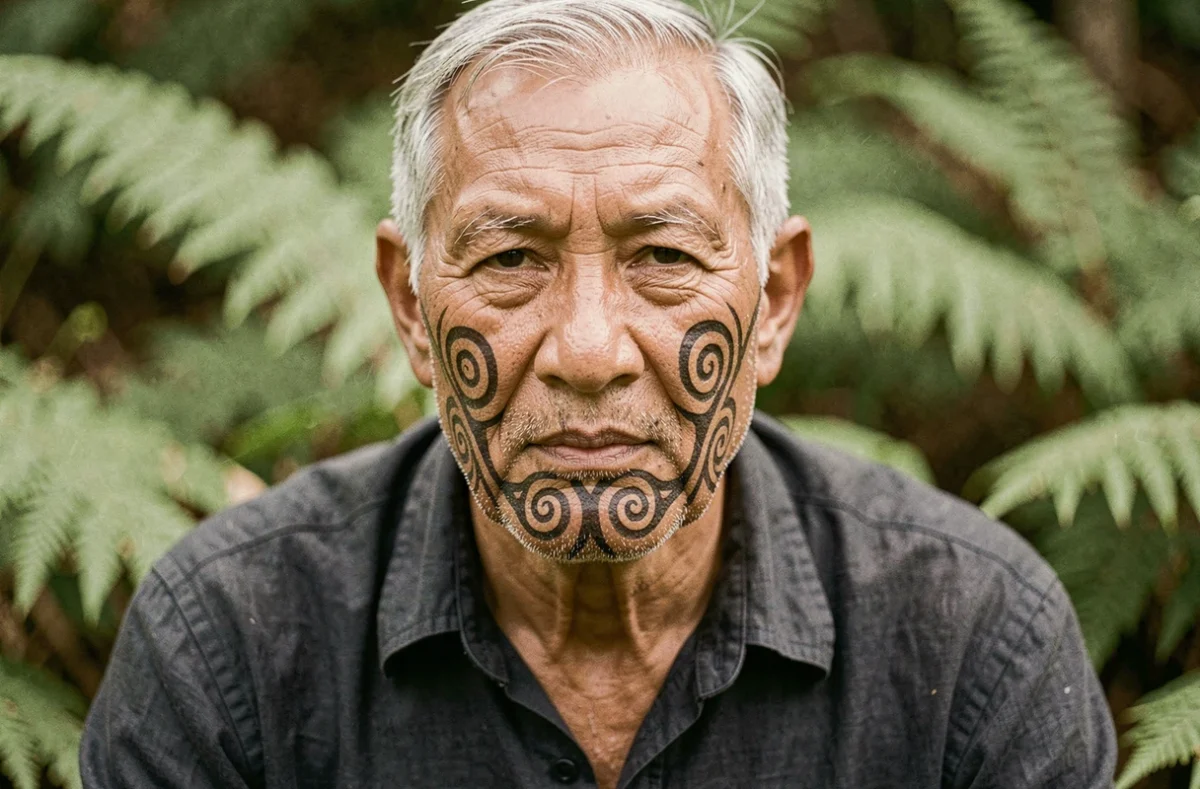
The tā moko and the kirituhi do not refer to the same practice, and this confusion fuels most of the design errors we observe in so-called “Māori” tattoos. The tā moko is linked to whakapapa (genealogy, tribal affiliation, status): each composition is designed for a specific person. The kirituhi, on the other hand, borrows the graphic vocabulary of moko without claiming this lineage. Before choosing a motif, this distinction conditions everything else.
Tā moko and kirituhi: two statuses for the same graphic vocabulary
A tā moko is not “chosen” from a catalog. Its composition arises from a dialogue between the tohunga tā moko (initiated practitioner) and the bearer. The lines, curves, and their placement on the body convey precise information: paternal lineage, maternal lineage, rank, personal achievements. The design is unique by construction.
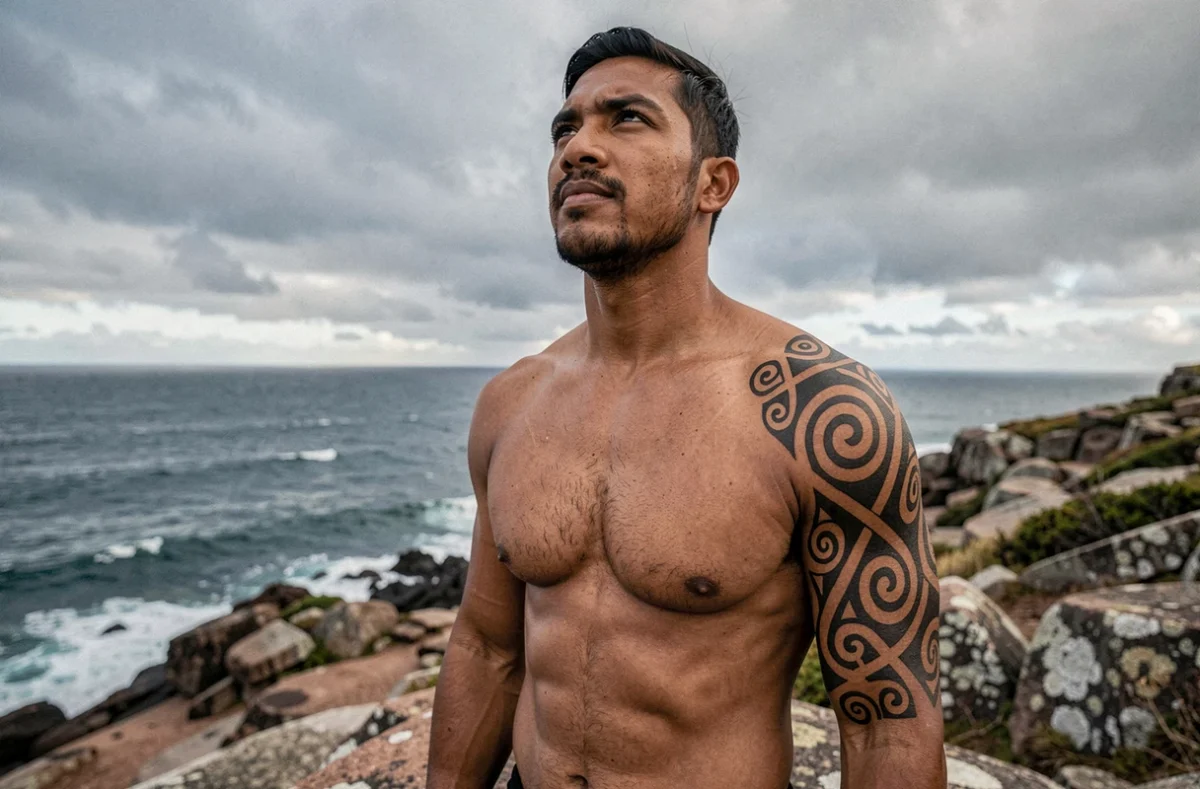
The kirituhi shares the aesthetic (koru spirals, geometric patterns, flow lines) but functions as a tattoo inspired by Polynesian art. It is open to anyone, without the requirement of whakapapa. This is the path we recommend to anyone wishing to wear a tattoo inspired by Māori culture without claiming an identity that is not theirs.
Confusing the two amounts to presenting a decorative motif as an identity document. Before moving on to everything you need to know about Māori tattoos, it is essential to understand that this boundary is not symbolic: it is structural.
Placement errors: why the area of the body changes the meaning of the Māori tattoo
In Māori culture, the face is associated with tapu (sacred). The moko kauae (chin) worn by Māori women and the male facial moko express genealogy and status directly. Reproducing a facial motif on a calf or forearm does not simply “move” a design: it profoundly alters its significance.
We regularly observe compositions where a motif designed for the face is rearranged on a calf or forearm, under the pretext that the graphic rendering remains coherent. In reality, each area of the body carries a distinct symbolic function within the Māori system. The upper body refers to the spiritual world and ancestors, while the lower body relates to the future and descendants.
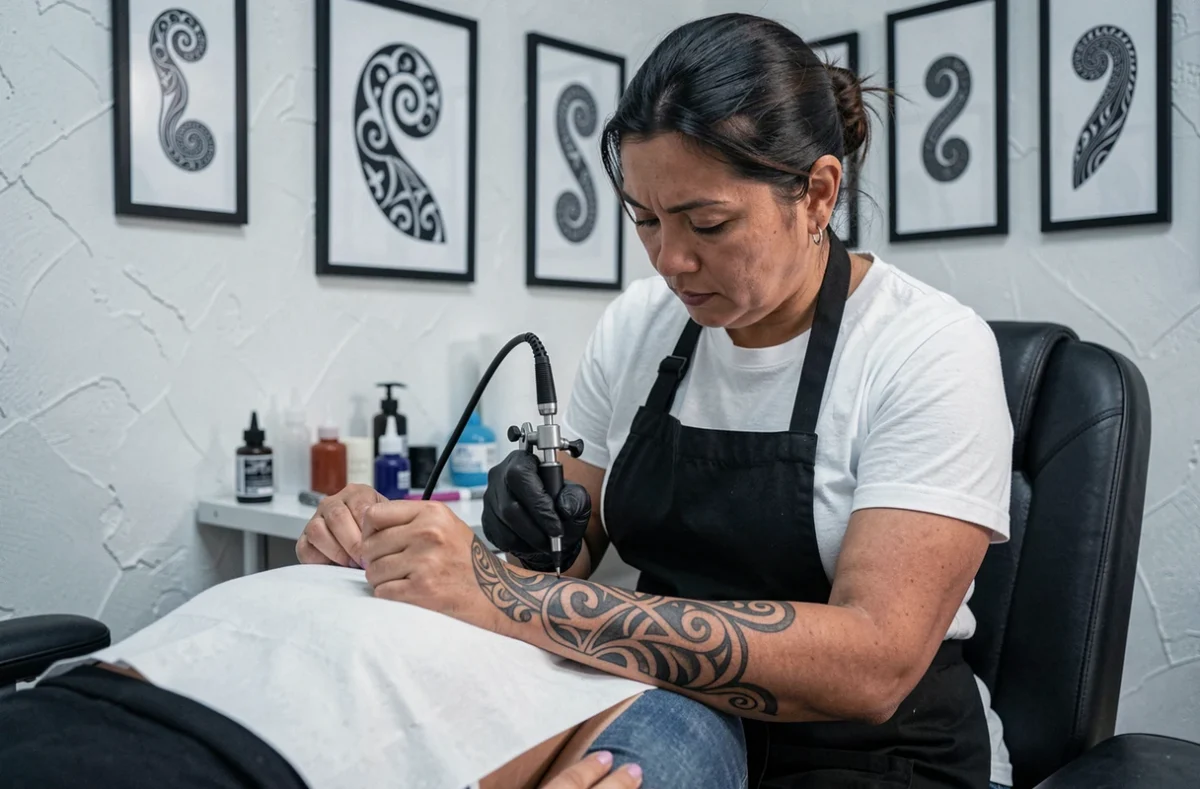
A tattoo artist specialized in Polynesian art adapts the motif to the chosen area rather than copy-pasting a design intended for another location. This is a point that online design banks never take into account.
Mixing Polynesian traditions: a common design error
Samoan, Marquesan, Tahitian, Māori: these traditions share a cultural area, not a unified graphic system. Each Polynesian tradition has its own rules of placement and symbolism. A Marquesan enata does not follow the same conventions as a Samoan pe’a motif, and both differ from the koru vocabulary specific to New Zealand moko.
Combining these elements in a single tattoo based solely on their visual proximity produces what we call a “stylistic collage.” The result may be graphically pleasing, but it does not correspond to any existing tradition and may offend the concerned communities.
- Check the precise cultural origin of each motif before integrating it into a composition (Marquesan, Samoan, Māori, Tahitian).
- Do not associate symbols from different systems without the approval of a practitioner trained in Polynesian arts.
- Favor a unique cultural coherence rather than an aesthetic patchwork from multiple islands.
Symmetry and composition: what online models do not show
The Māori tattoo boards circulated on the Internet almost always display perfect symmetry. This “clean” rendering reassures the Western eye, but perfect symmetry is not faithful to the tradition of tā moko. Recent sources dedicated to moko emphasize that the left and right sides of the face (and body) tell different stories: paternal lineage on one side, maternal lineage on the other.
A perfectly symmetrical motif erases this narrative duality. It transforms a story into decoration. The work of a tohunga tā moko incorporates deliberate variations between the two sides because the life of the bearer is not symmetrical.
Identifying a copied model
Several signals should alert you before validating a design proposed by a studio:
- Absolute symmetry without lateral variation, a sign of a generic digital template.
- Absence of prior dialogue about the personal history of the bearer or the chosen body area.
- Motifs combining several traditions (Samoan shark teeth, Māori koru, Marquesan crosses) without cultural justification.
- Proposal of a facial moko to a person without Māori ancestry, without mentioning kirituhi as an alternative.
Choosing a tattoo artist specialized in Polynesian tattooing: concrete criteria
The first criterion is not the Instagram portfolio. It is the tattoo artist’s ability to explain the cultural origin of each element they propose. A competent practitioner distinguishes kirituhi from tā moko without hesitation and systematically directs those without whakapapa towards kirituhi.
We recommend asking three questions before validating a project: what cultural tradition inspires the proposed motif, why this body placement, and what is the meaning of each element integrated into the composition. A tattoo artist who responds “it’s just tribal” does not master the subject.
The quality of the line matters, of course. The flow lines of Polynesian tattoos require a technical consistency that not all tattoo artists possess. Asking to see healing results after several months remains the best indicator of mastery, more so than photos taken right after the session.
The Māori tattoo involves much more than an aesthetic preference. Respecting the distinction between tā moko and kirituhi, checking the cultural coherence of motifs, and questioning body placement are three simple gestures that separate a thoughtful project from an unintentional appropriation.