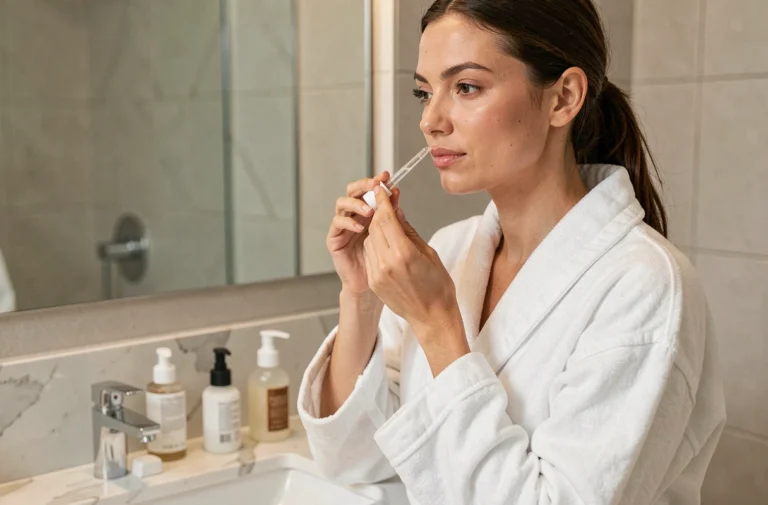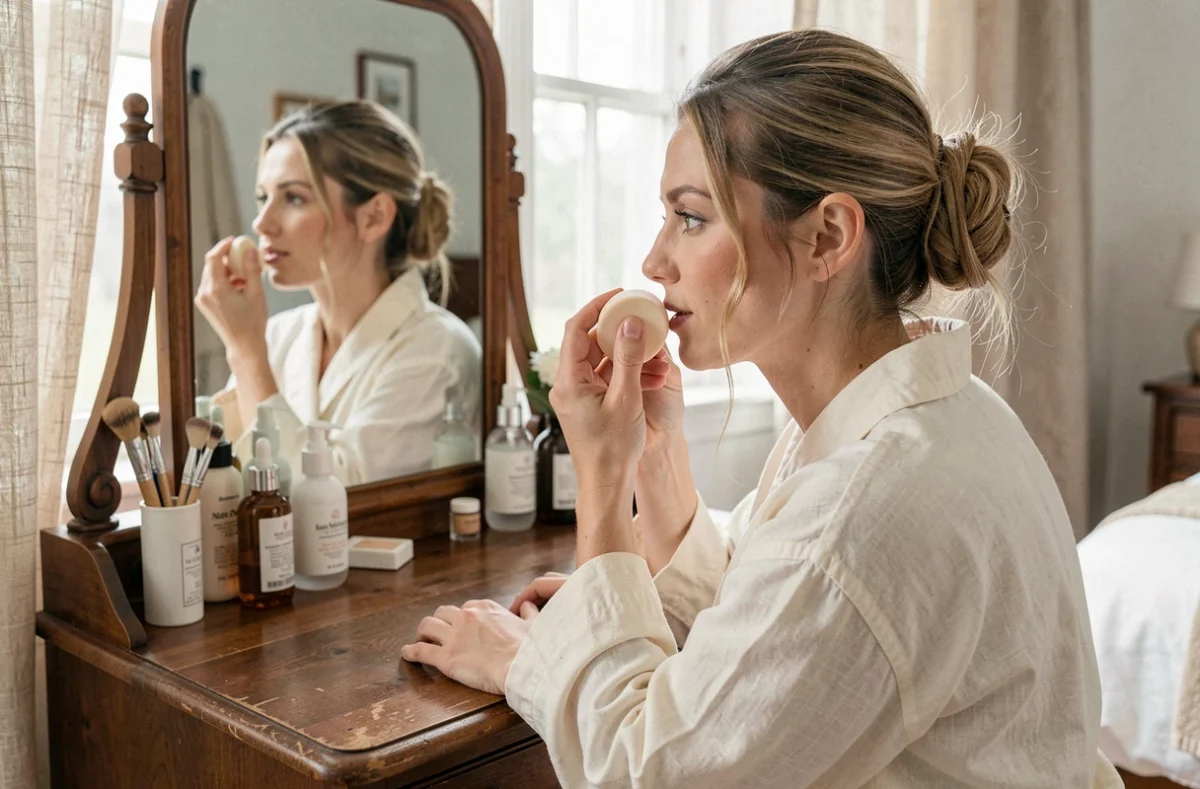
Natural makeup is less about layering products and more about finding the right match between the formula, your skin type and your application technique. Revealing a natural glow every day means mastering a few precise techniques and choosing textures that blend into the skin rather than cover it.
Skincare-makeup hybrids: what’s changing in natural makeup
Hybrid products that combine skincare and colour are no longer just a standalone marketing claim. The broader trend described by Personal Care Insights in October 2026 confirms growing demand for skin-health benefits, alongside a clear expectation: claims must be backed by credible evidence.
In practice, a foundation or BB cream that claims to hydrate should contain active ingredients with documented efficacy. Plant-based waxes (rapeseed, candelilla, carnauba) and natural gums (acacia, xanthan) are replacing synthetic binders in certified mascaras. Adding olive oil boosts shine, but the real challenge remains waterproof wear: volatile silicones, a standard ingredient in conventional formulas, still have no fully satisfactory natural alternative.
At Claire Makeup and Co, this hybrid approach means combining a skin assessment with the selection of suitable textures, so makeup supports skin quality instead of masking it.
European cosmetics regulations: how to read a makeup label
European cosmetics regulations are regularly updated, changing the list of substances permitted in products sold in the EU. Regulation 2025/877 added new substances classified as CMRs to the list of prohibited ingredients, with the rules applying from 1 September 2025. A product purchased before that date may contain ingredients that are now banned.
Regulations on microplastics in cosmetics set different deadlines for different categories. For makeup, leave-on lip products and nail products, the transition period runs until 2035. This does not mean that all current products contain microplastics, but it is a good reason to check the INCI list when you shop.
A useful habit: compare the ingredient list with regulatory databases available online. Claims such as “paraben-free” or “clean” offer no legal guarantee if the formula does not comply with current restrictions.
How to apply foundation and concealer for a natural finish
Successful natural makeup depends as much on technique as on the product. Work foundation from the centre of the face outwards, using light strokes rather than applying it as an even layer. This concentrates coverage where imperfections are most visible (the T-zone and around the nose), while letting the skin show through on the cheeks and forehead.
Three technical details can make all the difference to the final result:
- Skin prep affects how long makeup lasts. A moisturising base suited to your skin type (gel for combination to oily skin, cream for dry skin) helps prevent foundation from settling into pores or fine lines.
- Your tool changes the finish. A brush gives more coverage, a damp beauty blender creates a second-skin effect, and your fingers help blend the product using your body heat.
- Apply concealer after foundation, not before. Applying concealer first means some of it will be removed in the next step, undoing the targeted correction.
For lips, velvet formulas with concentrated pigments last longer than a classic gloss while still giving a natural matte finish. Choose a shade in the same colour family as your natural lip colour, one or two shades deeper.
Mascara and eye makeup: technical details often overlooked
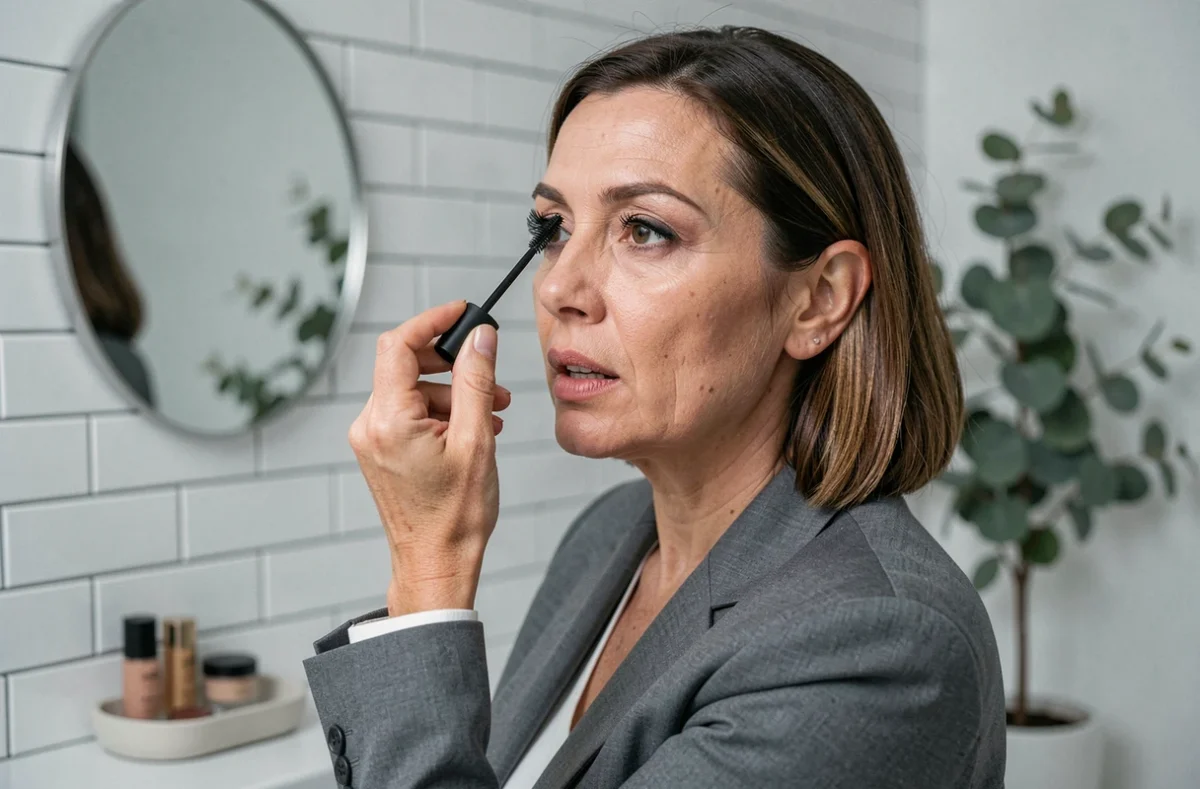
Mascara is still the most technical product in a makeup bag. Its formula needs to dry quickly, coat lashes without weighing them down and be gentle on the eye area, which is particularly sensitive. Certified natural mascaras use almost no synthetic preservatives, relying on glycerin as a co-preservative and low-water formulas.

The brush matters just as much as the formula. A brush with short, dense bristles deposits more product on each lash, making it a good choice for fine lashes. A silicone brush separates thicker lashes more effectively but deposits less product. For best results, place the brush at the roots and sweep upwards in a gentle zigzag motion to prevent clumping.
The period-after-opening symbol on the packaging is the only reliable guide to when you should replace your mascara.
Loose powder and setting: when and how to use it on your face
Loose powder sets makeup and mattifies the skin, but using too much creates a cakey finish that undoes the foundation’s sheer effect. Apply it only to the T-zone and, if needed, the chin, where sebum can affect wear throughout the day.
Translucent powder suits most skin tones. Tinted powders are only for evening out a foundation that is slightly too light. For best results, pick up a small amount with a large brush, tap off the excess, then lightly sweep it over the skin without pressing.
Natural makeup is not about erasing the skin’s texture. Pores, freckles and slight variations in pigmentation are all part of a natural glow. Makeup should even out the complexion without making it look uniform, letting the skin show through the products.