Measuring the effectiveness of a beauty routine means knowing what to look for: texture, hydration, UV reactivity, and tolerance to active ingredients. Most guides pile on steps without ranking their actual impact on skin radiance. This article compares the practices that make the biggest difference to the final result, drawing on available dermatological recommendations and European regulatory guidelines.
Sunscreen in a beauty routine: comparing UVA and SPF guidelines
Sun protection is often relegated to the end of a routine, as if it were optional. Regulatory data show that it is the skincare product with the most tightly regulated performance criteria, making it the easiest to verify.
| Criterion | What the figure measures | What to check on the product |
|---|---|---|
| SPF (stated rating) | Protection against UVB rays (sunburn) | SPF 30 minimum recommended for daily use |
| UVA protection | Protection against skin aging and dark spots | UVA protection must be at least one-third of the SPF |
| Critical wavelength | UV coverage spectrum | At least 370 nm, according to the European recommendation |
| Circled UVA logo | Compliance with the European UVA guideline | Found on compliant products sold in the EU |
An SPF 50 sunscreen without the circled UVA logo lets through a significant amount of the radiation responsible for dull skin and dark spots. Checking for the circled UVA logo is more reliable than relying on SPF alone.
This table helps explain why two sunscreens with the same SPF do not necessarily offer the same protection. For a beauty routine focused on radiance, UVA coverage is the deciding factor.

Skin patch testing: a step often overlooked in facial skincare routines
Adding a new serum or cream to your routine without testing it first means taking a chance with your skin’s reactivity. The American Academy of Dermatology (AAD) provides a clear protocol to help identify intolerance before it develops on your face.
The method involves applying the product to a small area of skin, twice a day for 7 to 10 days. Redness, itching, or swelling during this period are signs to stop using the product. This at-home test does not replace a medical allergy assessment, but it can screen for the most common incompatibilities.
At leblogbeaute.fr, several skincare reviews break down product ingredients and the active ingredients that may trigger reactions, making it easier to narrow down your options even before a patch test.
“Fragrance-free” and “unscented” labels on facial skincare
The AAD clearly distinguishes between these two terms. A product labeled “unscented” may contain masking agents to conceal an odor, which can themselves irritate reactive skin. Only the label “fragrance-free” guarantees that no added fragrance substances are present.
If persistent reactions are difficult to identify, the AAD recommends seeing a dermatologist for patch testing. This point is rarely covered in beauty routine guides, even though it directly affects product choices for sensitive skin.
Skincare application order: what really affects absorption
The order in which you apply skincare products determines how well they penetrate. The practical rule is based on each product’s texture and consistency.
- Cleansing prepares the skin by removing sebum and residue, which affects the absorption of everything that follows
- Water-based formulas (toner, serum) go on before oil-based formulas (cream, oil) because water cannot pass through a lipid film
- Moisturizer seals in the serum’s active ingredients and maintains hydration in the epidermis
- In the morning, sunscreen goes on last because it needs to form a continuous protective film on the skin’s surface
Reversing the order of serum and cream, for example, reduces the availability of the serum’s active ingredients. Applying serum over cream significantly reduces its effectiveness.
Nighttime routine: can a mask replace moisturizer?
An overnight mask does not serve the same purpose as a night cream. A mask delivers a concentrated dose of active ingredients over a short period (overnight), while a night cream maintains hydration for several hours. Alternating between the two as needed (for dullness, tightness, or blemishes) produces better results than using either one every time.
Results: minimalist routines versus multi-step routines
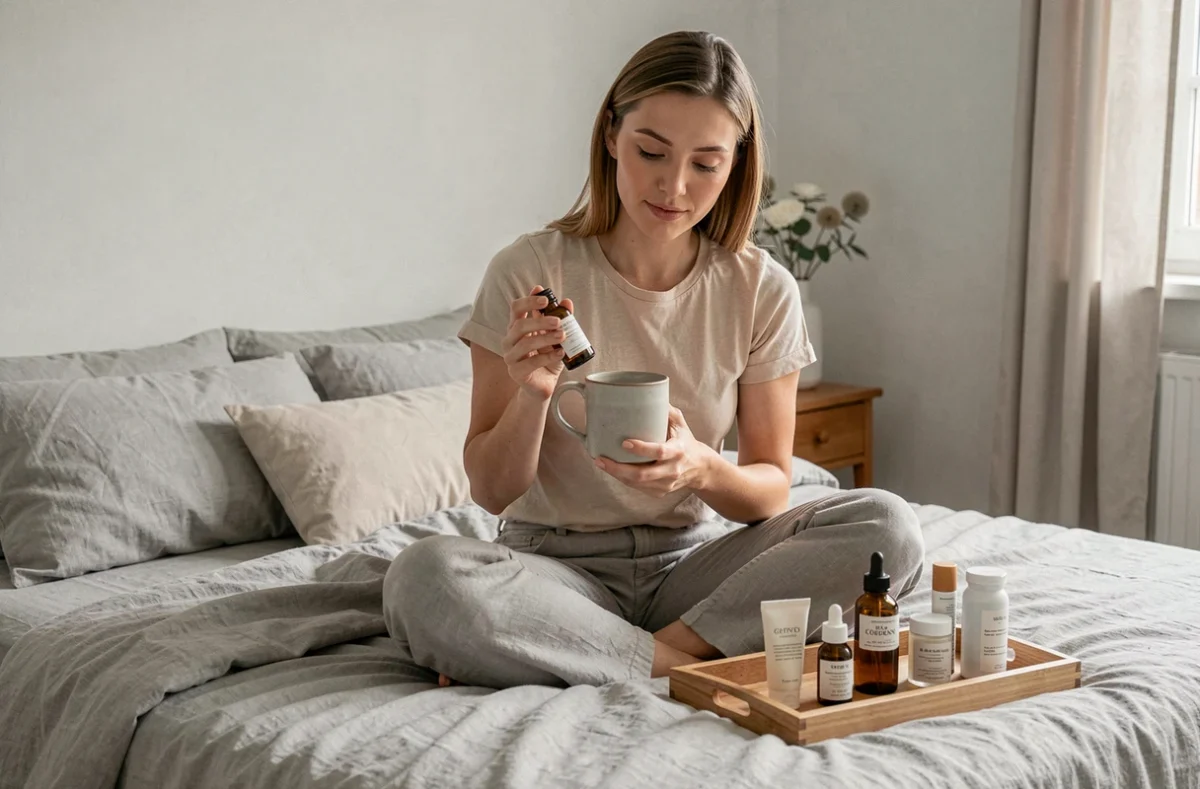
Ten-step routines have popularized the idea that the more skincare products you layer, the more radiant your skin will become. Available evidence points in another direction: a four-step routine done well (cleansing, a targeted serum, moisturizer, and sun protection) meets the basic needs of most skin types.
Using more products increases the risk of interactions between active ingredients. Some exfoliating acids, when combined with vitamin C or retinol, can cause irritation that is mistakenly attributed to a skin “purge.” Using fewer products reduces the risk of cross-reactions.
The results from four carefully chosen products rarely fall short of those from eight products layered without a clear purpose. The time saved, however, makes it easier to apply each product properly and allow it to absorb before applying the next layer.
Healthy-looking, radiant skin depends less on the number of products you use than on three verifiable factors: your sunscreen’s UVA coverage, the tested tolerance of each product, and the correct order of application. These three factors account for most of the differences in results between routines.