
The manometer attached to a sand filter displays a value in bars that reflects the resistance the filtering media opposes to the flow of water. This value varies depending on the installation (filter diameter, pump power, length of pipes), making any reference to a universal number unnecessary. The only reliable data is the reference pressure specific to each installation, recorded just after a complete backwash, with a clean filter and purged system.
Reference pressure of the sand filter: how to establish it
The reference pressure is noted during the first start-up of the season or after a sand change. The pump has been running for a few minutes, the valves are in filtration position, and the skimmer basket is empty. The manometer stabilizes: this is the baseline value of the installation.
When trying to determine the normal pressure of a swimming pool sand filter, we refer to this initial reading, specific to each pool. A small diameter filter paired with a powerful pump will show a higher value than an oversized filter fed by a modest pump.
Note this reference pressure with a marker on the filter lid or in a maintenance log. All future interpretations of the manometer depend on this benchmark.
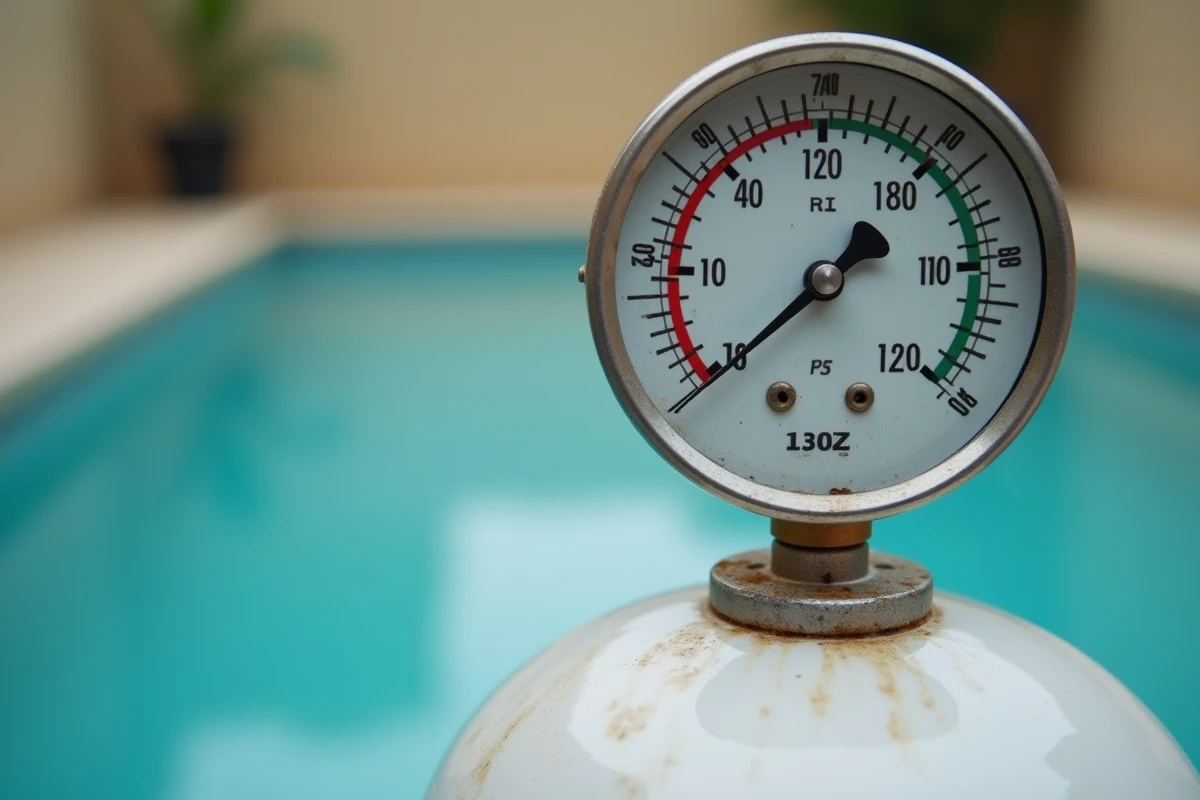
Reading the manometer: interpreting pressure deviations
The manometer does not provide a diagnosis by itself. It signals a deviation from the reference pressure, and it is this deviation that guides the analysis.
Pressure rising above the reference
A gradual increase means that the sand is trapping more and more particles. The flow of water decreases, the pump works harder, and the pressure rises. A backwash is necessary when the needle exceeds the reference significantly.
If the pressure remains high after a backwash, the problem lies downstream of the filter: partially closed valve, obstructed return pipe, or clogged internal filter screens.
Pressure dropping below the reference
An abnormally low pressure indicates that the pump is not sending enough water into the filter. The causes are almost always on the suction side:
- Skimmer basket or pump pre-filter clogged with debris, which hinders flow even before the filter
- Air intake on a fitting, a pump lid seal, or a cracked pipe, causing partial loss of prime
- Suction valve not fully open or water level in the pool too low to properly feed the skimmer
In these situations, the sand filter is not at fault. The manometer simply reflects insufficient inlet flow.
Needle at zero, pump running
Two possibilities: the pump is completely primed (check the pre-filter indicator), or the manometer itself is defective. A manometer stuck due to limescale or damaged by frost gives a frozen reading. Replacement is very inexpensive and can be done in a few minutes without draining the filter.
Maintenance of the sand filter and maintaining stable pressure
Maintaining a pressure close to the reference requires regular but simple maintenance of the filtration system.
The backwash is the first action. By reversing the flow of water, impurities trapped in the sand are flushed out to the sewer. After backwashing, a short rinse resets the sand bed before returning to filtration. The pressure should drop back near the reference value after this operation.

In the long term, the filtering media degrades. The sand rounds off, compacts, and loses its retention capacity. When backwashing no longer lowers the pressure or the water remains cloudy despite proper chemical treatment, replacing the sand should be considered. The lifespan depends on the frequency of pool use and the quality of the raw water.
The screens located at the bottom of the filter also deserve periodic checking. A cracked screen allows sand to pass into the return pipes (resulting in sand at the bottom of the pool) and alters the pressure reading.
Multiport valve and its impact on filter pressure
The multiport valve (four or six positions depending on the model) directs the flow of water in the filter. Each position generates a different hydraulic resistance, thus a different pressure on the manometer.
- Filtration position: the flow passes through the sand from top to bottom, normal operating pressure
- Washing position (backwash): the flow rises through the sand, generally lower pressure
- Recirculation position: water bypasses the filter, very low pressure as there is no resistance from the filtering media
- Closed position: no flow, pressure rises briefly then the pump should not remain on
Operating the multiport valve while the pump is running damages the internal star seal. Always turn off the pump before changing positions. A worn star seal creates internal leaks that distort pressure and reduce filtration efficiency.
The O-ring of the valve lid and the star seal should be checked at least once per season. A thin layer of silicone grease prolongs their sealing.
The reading of the manometer only makes sense when compared to the reference pressure of the installation. A properly sized sand filter, powered by an appropriate pump and equipped with a functional manometer, leaves very little room for doubt: when the needle deviates significantly from the initial value, the system indicates that maintenance intervention, often just a simple backwash, is enough to restore effective filtration.